Instruments

Instruments

Here’s a playlist with a series of short videos that demonstrate basic playing techniques for each instrument.

Below, you’ll find a list of the main instruments we use, along with a brief summary of their characteristics and roles in Brazilian carnival music.

Surdo (soor-doh)

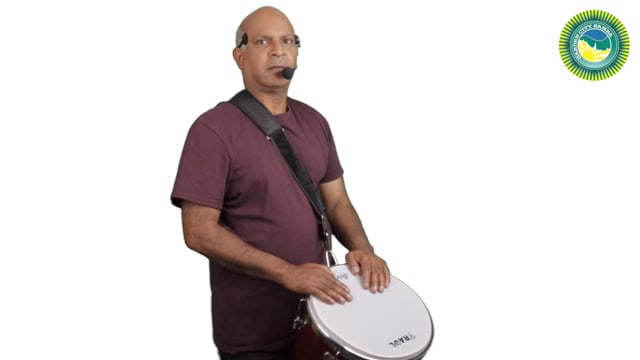
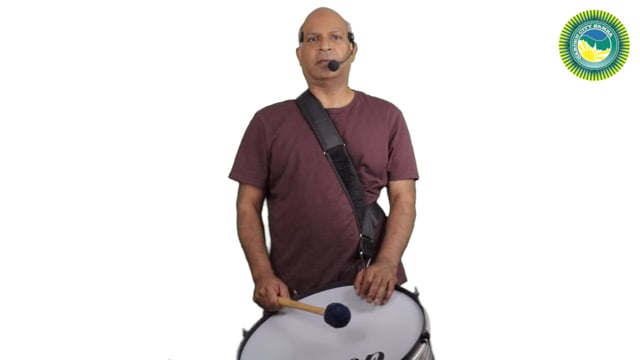
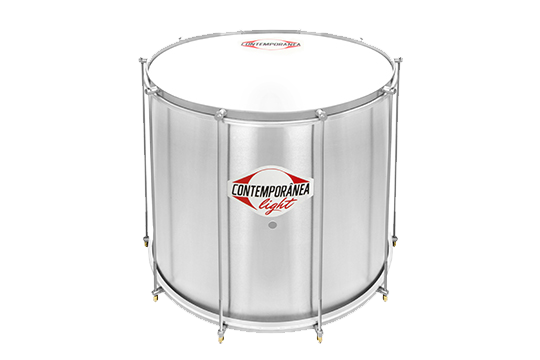
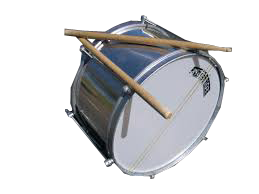
Surdos are large cylindrical drums with skins on both ends. Strapped over the shoulder the top skin is played with one or two beaters (depending on the style), producing a bass sound. The surdo rhythm creates the heartbeat in the Samba and provides the foundation for the patterns of the other instruments.

Metal surdo: a large cylindrical base drum with a shiny metal shell and white nylon head standing upright.

Caixa (cash-a)

A snare drum is found in most percussion ensembles in Brazil. It is a double-headed drum with steel strings on one side and is used to provide stability, swing and to drive the band playing either accents on to the beat or syncopated lines.

Caixa: a medium-sized cylindrical drum with a shiny silver metal shell and white nylon head. There are three parallel steel wire strings pulled tight across the middle of the head. The drum is on it's side with two wooden drum sticks placed on top.

Agogo (a-go-go)

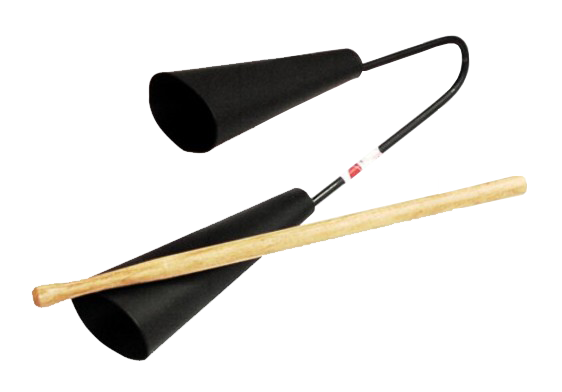
Cone-shaped, pair of metal-tuned bells attached to a handle. The small bell produces a high sound and the large bell a lower sound. They’re played with a wooden stick to create repetitive melodies.

Black metal agogo bell: a pair of small cone shaped bells of different sizes. The cones are on their sides with the narrow ends connected by a thin metal handle so the smaller bell sits above the larger bell with a gap in between. A wooden stick lies on top of the larger bell.

Timbau (chim-bow)

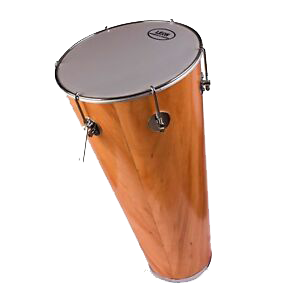
The Timbau has a conical wooden shell, a plastic skin and is played with hands. You get a deep bass, dry open tones and sharp slaps all on one instrument! Great for soloing, grooving and unison phrasing.

Wooden timba: a tall slim conical drum with a larger head and narrower bottom. It has a wooden shell and white plastic head.

Tamborim (tam-bor-him)

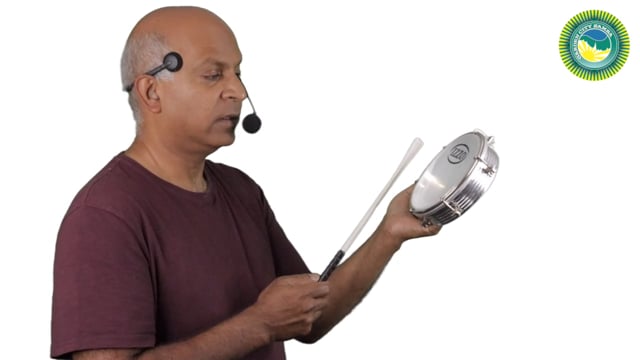
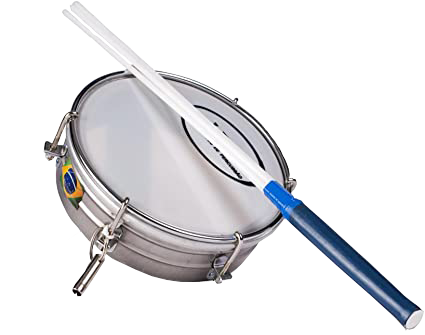
Tamborims are one-headed drums about six inches in diameter and played with a thin stick or a plastic stick with several prongs. Typically playing short repetitive patterns and sometimes longer phrases that punctuate the music.

Tamborim: a small one-headed cylindrical drum with a shiny silver metal shell and white plastic head, around 6 inches in diameter. A three-pronged plastic drum stick with dark blue handle rests on top.

Repique (hepi-key)

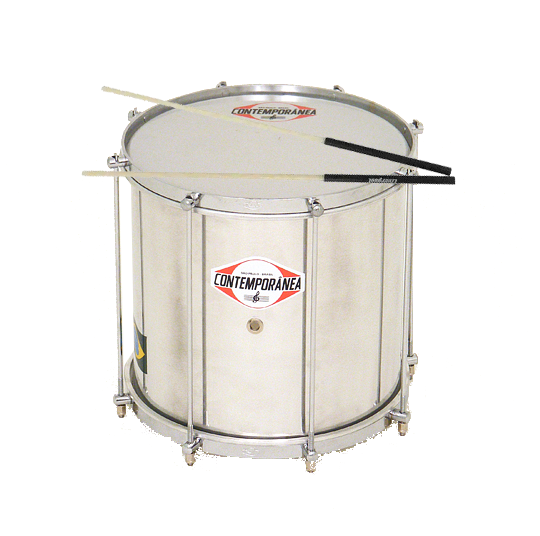
This instrument acts as the lead drum of an ensemble and plays intros, endings and breaks. It is a double headed drum which is tuned high. In samba it is played using a stick and hand technique, and in samba reggae, it’s played with two thin sticks.

Repique: a medium-sized cylindrical drum with shiny silver metal shell and white nylon head. A pair of plastic rod drum sticks rest on top.

Chocalho (show-cal-yo)

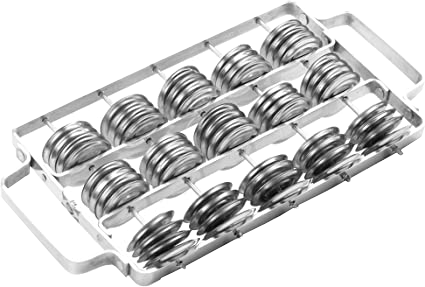
Chocalhos have a metal frame with metal jingles. Held with both hands, they’re played with back and forth movements and drive the music along.

Chocalho: a hand-held instrument consisting of a shiny silver metal frame with a three by five grid of bundles of shiny sliver metal jingles. There is a d-shaped metal handle either side of the frame.

4-tone Agogo

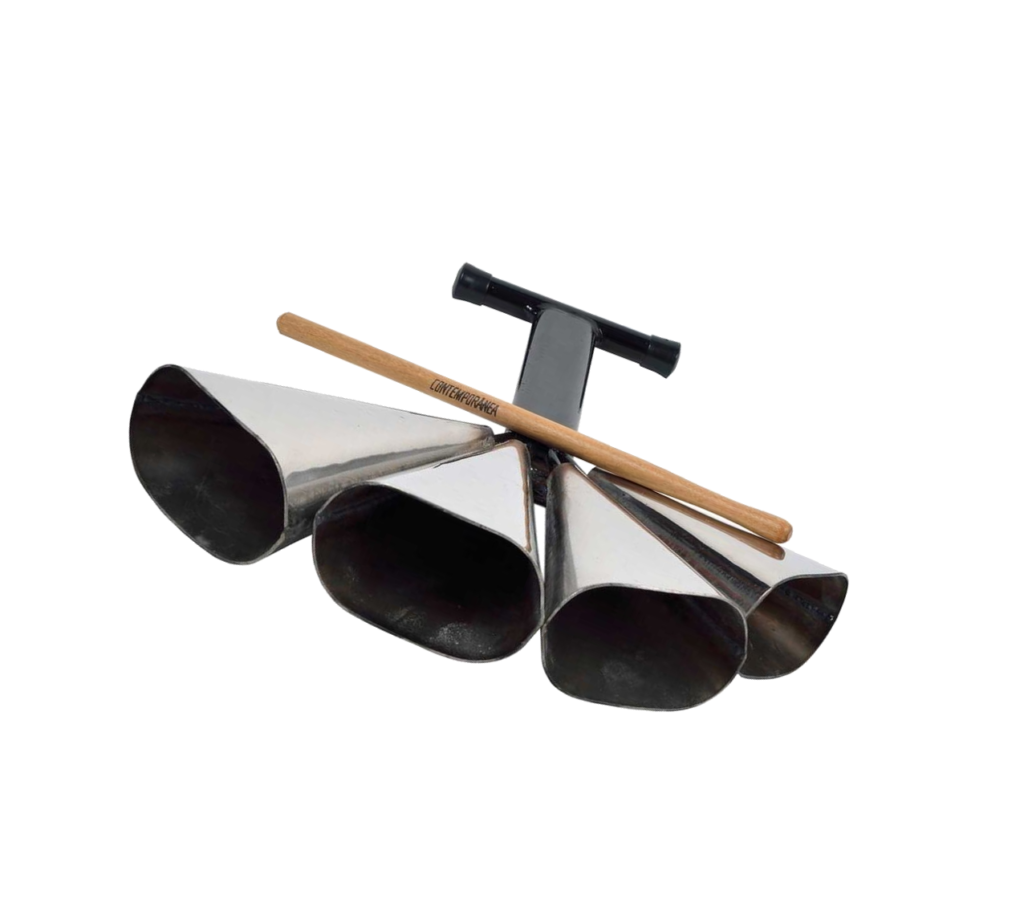
4 bells of different sizes means you can play more complex melodies. As they’re a little heavy, you hold the instrument in front of you and rest the bar at the end of the handle against your body.

4-bell agogo: four slightly flattened conical bells of different sizes, made of shiny silver metal. The bells are side-by-side in size order with the narrow ends connected into a single handle. A wooden stick lies on top.

Ganza (gan-zah)

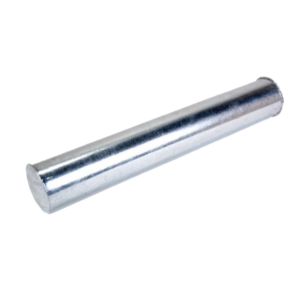
Fulfils the same function as the chocalho and it is played with the same technique, but it has a softer sound.

Ganza: A shiny silver metal cylindrical tube designed to be shaken.